
Apple iPhone Leasing Program Explained: Monthly Costs, Pros, Cons, and Who Should Use It
Introduction
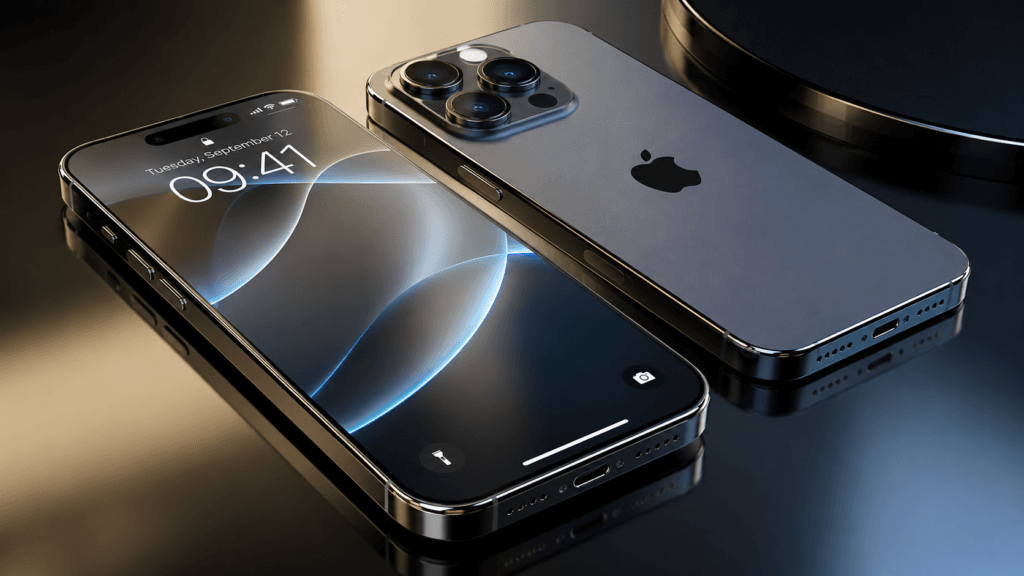
For years, buying an iPhone meant choosing between paying the full price upfront, financing it through monthly installments, or waiting for a carrier promotion. Apple is now taking a different approach by introducing a dedicated leasing program that allows customers to use premium devices for a monthly fee without immediately owning them. For now, Apple’s new upgrade launches in the United States.
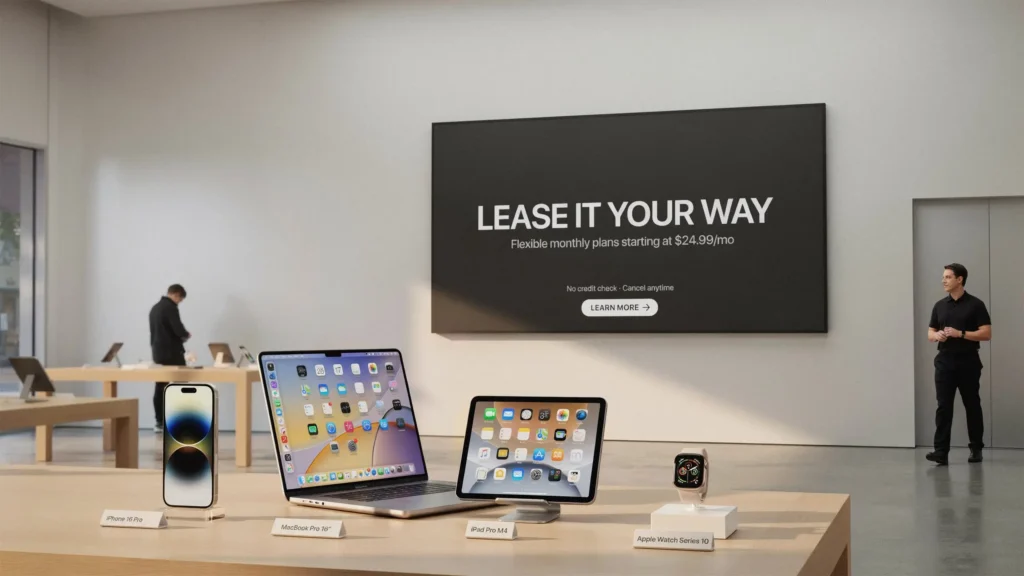
The new initiative isn’t limited to the iPhone. Apple has expanded the concept to include MacBooks, iPads, and Apple Watches, giving customers more flexibility when upgrading to the latest technology. The program is powered through a partnership with Klarna, making monthly payments and upgrades easier than ever for eligible buyers.
At first glance, leasing sounds attractive—lower monthly payments, access to the newest devices, and the ability to upgrade regularly. However, many consumers are wondering whether leasing actually saves money or simply changes how they pay for expensive technology.
In this guide, we’ll explain exactly how Apple’s new leasing program works, compare leasing with buying, examine the advantages and disadvantages, and help you determine whether it’s the right choice for your budget and upgrade habits.
Table of Contents
What Is Apple’s New iPhone Leasing Program?
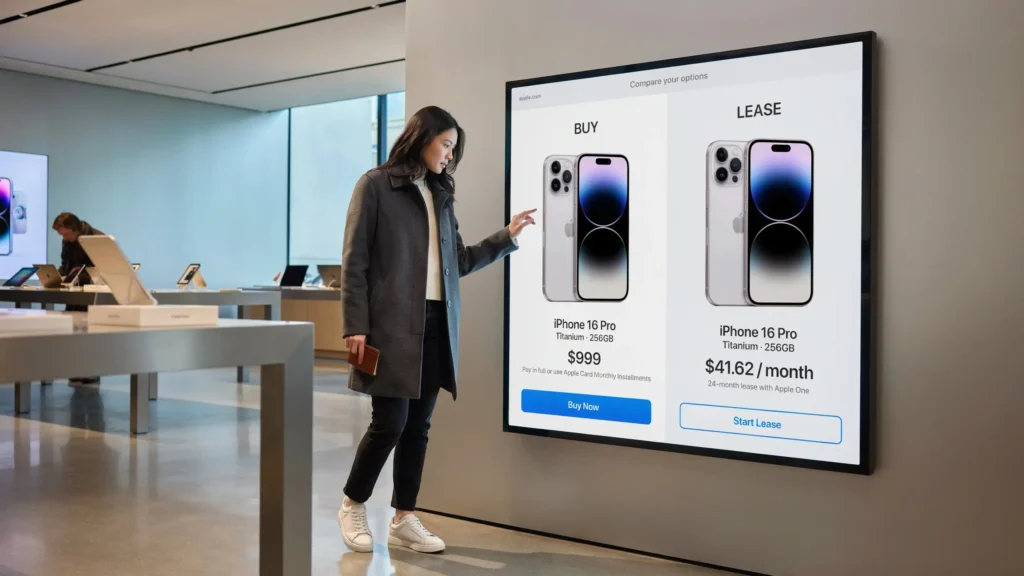
Apple’s latest leasing initiative introduces a new way for customers to access premium Apple products without purchasing them outright. Instead of paying the entire cost of an iPhone or financing it until ownership is transferred, customers pay a monthly leasing fee to use the device for an agreed period.
The program covers several Apple products, including:
- iPhone
- Mac
- iPad
- Apple Watch
Unlike traditional financing, leasing focuses on temporary ownership. Once the lease period ends, customers generally have three options:
- Return the device.
- Upgrade to a newer Apple product.
- Purchase the device by paying the remaining value, depending on the agreement.
This model is already common in the automotive industry, and Apple is adapting it for consumer electronics to make premium devices more accessible.
Why Did Apple Introduce a Leasing Program?
Apple’s business strategy has gradually shifted from one-time hardware sales toward recurring services and subscription-based revenue. Services like iCloud+, Apple Music, Apple TV+, and Apple One already generate billions of dollars each year. A leasing program fits naturally into that long-term strategy by encouraging customers to stay within Apple’s ecosystem while upgrading devices more frequently.
There are several reasons Apple is moving in this direction.
Lower Barrier to Entry
Premium Apple products continue to become more expensive. Monthly leasing makes flagship devices more affordable without requiring a large upfront payment.
Faster Upgrade Cycles
Instead of keeping an iPhone for four or five years, customers may choose to upgrade every year or every two years, ensuring they always have access to Apple’s newest technology.
Stronger Customer Retention
Customers who lease Apple devices are more likely to remain within Apple’s ecosystem rather than switching to competing brands.
Sustainable Device Lifecycle
Returned devices can be refurbished, recycled, or resold, supporting Apple’s environmental commitments while creating additional revenue opportunities.
How Apple’s Leasing Program Works
Although the exact terms vary depending on eligibility and financing approval, the overall process is designed to be straightforward.
Step 1
Choose an eligible Apple product.
Step 2
Select the preferred lease duration and monthly payment plan.
Step 3
Complete eligibility verification through Apple’s financing partner.
Step 4
Receive your Apple device.
Step 5
At the end of the lease, choose whether to:
- Upgrade to a newer model
- Return the device
- Purchase it if your agreement allows
This process gives customers flexibility while reducing the financial burden of paying the full retail price upfront.
Which Apple Devices Are Included in the Leasing Program?
Apple’s leasing initiative isn’t limited to the iPhone. One of its biggest advantages is that customers can lease several of Apple’s most popular products under a similar payment structure. This gives users more flexibility when choosing how they want to access premium hardware.
According to Apple’s announcement, the program includes:
- iPhone – Apple’s flagship smartphone lineup.
- Mac – Including MacBook Air, MacBook Pro, iMac, and other eligible models.
- iPad – Suitable for students, professionals, and creatives.
- Apple Watch – Smartwatches for fitness, health tracking, and daily productivity.
This broader device coverage makes the leasing program attractive for customers who regularly upgrade multiple Apple products rather than just their phones.
For families or professionals deeply invested in the Apple ecosystem, leasing several devices may simplify budgeting by replacing large one-time purchases with predictable monthly payments.
Understanding Apple’s Monthly Leasing Costs
One of the biggest reasons customers are interested in Apple’s new leasing program is affordability.
Instead of paying over $1,000 for a flagship iPhone upfront, users can spread the cost into manageable monthly payments.
Although pricing depends on the specific device, storage configuration, lease duration, and financing approval, the concept is straightforward:
You pay a monthly fee for access to the device rather than immediately owning it.
This approach can be especially appealing for:
- Students
- Young professionals
- Small business owners
- Content creators
- Users who prefer upgrading every year
However, there’s an important consideration that many buyers overlook.
A lower monthly payment does not automatically mean you’re spending less money overall.
The total amount paid throughout the lease may be higher than purchasing the device outright, depending on the agreement and whether you eventually buy the device.
This is why comparing the total ownership cost is far more important than comparing monthly payments alone.
Apple Leasing vs Buying an iPhone
This is the question most potential customers will ask before joining Apple’s leasing program.
Although leasing reduces the upfront financial burden, buying still offers advantages that shouldn’t be ignored.
| Leasing | Buying |
| Lower upfront payment | Full ownership immediately |
| Easy upgrades | Better long-term value |
| Monthly predictable cost | No monthly obligations after purchase |
| Good for yearly upgraders | Ideal for keeping devices 4–6 years |
| May require returning the device | Device becomes your permanent asset |
There isn’t a single answer that fits everyone.
If you upgrade every year because you always want the newest camera system, processor, and Apple Intelligence features, leasing could make sense.
However, if you typically keep an iPhone for four or five years, purchasing the device outright is usually the more economical choice over the long term.
Expert Insight
After analyzing Apple’s strategy over the years, one thing has become clear:
Apple isn’t simply selling hardware anymore.
It’s gradually transforming into a subscription-driven ecosystem where customers pay for continuous access rather than one-time ownership.
The leasing program aligns perfectly with this long-term vision.
Apple Leasing vs Traditional Financing
Many consumers confuse leasing with financing, but they are fundamentally different.
Financing
When financing an iPhone:
- You make monthly payments.
- After the final payment, you own the device.
- You can sell, trade, or keep it indefinitely.
Leasing
With leasing:
- You pay to use the device.
- Ownership generally remains with the leasing provider until specific purchase conditions are met.
- At the end of the lease, you’ll typically return, upgrade, or purchase the device based on the agreement.
This distinction is crucial because ownership affects the overall value you receive from the program.
Advantages of Apple’s Leasing Program
Apple’s new program introduces several benefits that may appeal to a wide range of users.
Lower Initial Cost
Instead of paying a significant amount upfront, customers can begin using premium Apple devices through manageable monthly payments.
Easier Upgrades
Technology evolves quickly.
Leasing makes it easier to move to newer iPhone models without selling your old device.
Budget-Friendly Payments
Monthly costs are easier for many households to manage compared to large one-time purchases.
Access to Premium Devices
Some customers who previously couldn’t justify buying Apple’s highest-end devices may now find them financially accessible.
Potential Environmental Benefits
Returned devices can be refurbished and resold, reducing electronic waste while extending product life cycles.
Potential Disadvantages You Should Consider
Although leasing offers flexibility, it’s not the right solution for everyone.
You May Never Own the Device
If you return the phone at the end of the lease, all previous payments essentially covered usage rather than ownership.
Long-Term Costs
Depending on the agreement, leasing may cost more than purchasing over several years.
Contract Obligations
Some lease agreements include conditions regarding:
- Damage
- Early termination
- Upgrade eligibility
Reading the complete agreement before signing is essential.
Limited Customization
Since the device may eventually be returned, some users may be less comfortable making permanent modifications.
Who Should Consider Apple’s Leasing Program?
Based on Apple’s target audience and current market trends, the program appears best suited for specific types of users.
Frequent Upgraders
If you buy every new iPhone generation, leasing could simplify the upgrade process.
Technology Enthusiasts
People who enjoy experiencing Siri AI Upgrade: Apple’s Biggest Assistant Update Yet may appreciate predictable monthly payments.
Students
Students who need premium Apple devices but prefer lower initial costs may benefit from leasing.
Creative Professionals
Photographers, designers, video editors, and developers often rely on current-generation Apple hardware for work.
Leasing could allow them to maintain modern equipment without making large capital investments.
Expert Opinion
In my view, Apple’s leasing program isn’t designed to replace buying—it creates another option.
For people who regularly upgrade to the latest technology, leasing may offer convenience and predictable monthly expenses.
For users who hold onto their devices for several years, traditional ownership will likely remain the more cost-effective choice.
Ultimately, the right decision depends less on the monthly payment and more on your upgrade habits, budget, and long-term expectations.
Is Apple’s New Leasing Program Worth It?
Whether Apple’s leasing program is worth considering depends on how you typically use your Apple devices.
For some people, the program offers a convenient and affordable way to stay up to date with Apple’s newest hardware. Others may discover that buying outright or using traditional financing provides better long-term value.
Leasing May Be Worth It If You:
- Upgrade to a new iPhone every one or two years.
- Prefer predictable monthly payments instead of a large upfront purchase.
- Want access to the latest Apple innovations without worrying about reselling your old device.
- Use Apple products professionally and benefit from always having the newest hardware.
Buying May Still Be Better If You:
- Keep your iPhone for four years or longer.
- Prefer owning your devices permanently.
- Like selling or trading your phone independently.
- Want the lowest total cost over the device’s lifetime.
Rather than asking, “Is leasing cheaper?”, the better question is:
“Does leasing match how I actually use my technology?”
For many consumers, the answer will depend on convenience rather than cost alone.
Expert Opinion: What Apple’s Leasing Strategy Means for the Industry
From my perspective as someone who closely follows the latest technology news and consumer trends, Apple’s new leasing initiative is about much more than making iPhones easier to afford.
It reflects a broader shift in how technology companies generate revenue.
Over the past decade, Apple has steadily expanded beyond hardware sales by introducing recurring services such as Apple Music, iCloud+, Apple TV+, Apple Fitness+, and Apple One. Adding a leasing model continues that strategy by creating another predictable, subscription-like revenue stream.
This approach could also influence competitors.
If Apple’s program proves successful, companies like Samsung, Google, Dell, HP, and Lenovo may further expand their own leasing or subscription offerings to remain competitive.
Consumers are increasingly paying for access instead of ownership—not only with software but also with physical products. Smartphones, laptops, and wearable devices may gradually follow the same path as streaming services and cloud subscriptions.
The biggest challenge for buyers will be understanding the true long-term cost before choosing convenience over ownership.
Final Verdict
Apple’s new leasing program represents a meaningful evolution in how premium consumer technology may be purchased in the future.
Rather than asking customers to spend over $1,000 on a flagship smartphone all at once, Apple is offering a more flexible alternative that aligns with modern subscription habits.
For users who enjoy upgrading regularly and value convenience, leasing could become an attractive option.
For those who prefer long-term ownership and maximizing value from each device, purchasing outright may still remain the smarter financial decision.
Ultimately, Apple’s newest initiative expands consumer choice rather than replacing traditional purchasing methods. iPhone 18 Pro rumours suggest that it will be launched in September, and people will definitely be waiting for it now after the new leasing policy.
As the technology industry continues moving toward recurring services and subscription-based experiences, Apple’s leasing program may become one of the company’s most significant business changes in recent years.
Frequently Asked Questions
Can I own the iPhone after leasing it?
Depending on the lease agreement, customers may have the option to purchase the device after the lease ends. However, ownership is not guaranteed under every plan, so reviewing the terms carefully is essential.
Is leasing cheaper than buying an iPhone?
Not necessarily.
Leasing often reduces the upfront cost and spreads payments over time, but the total amount paid may equal or exceed the purchase price depending on the agreement and whether you eventually buy the device.
Which Apple products are included in the leasing program?
Apple’s program includes eligible:
iPhone
Mac
iPad
Apple Watch
Availability may vary depending on region and device model.
Does the leasing program include AppleCare+?
Coverage options may differ based on the lease agreement and region. Customers should verify whether AppleCare+ is included or available as an optional add-on before completing their lease.
Can I upgrade before my lease ends?
Many leasing programs allow upgrades under specific conditions. Eligibility typically depends on the agreement, payment history, and the condition of the returned device.
Is Apple’s leasing program available worldwide?
Initially, availability is expected to vary by country. Customers should check Apple’s official website to see whether the program is offered in their region.
Is leasing better for businesses?
For some businesses, leasing can simplify budgeting and provide easier access to modern hardware without large upfront investments. However, each organization should evaluate the total cost and tax implications based on its own financial situation.