
My First Love: The iPhone 4 and Why I Still Remember It
There are smartphones you use, smartphones you upgrade from, and then there are phones you remember.
For me, the iPhone 4 belongs in the last category.
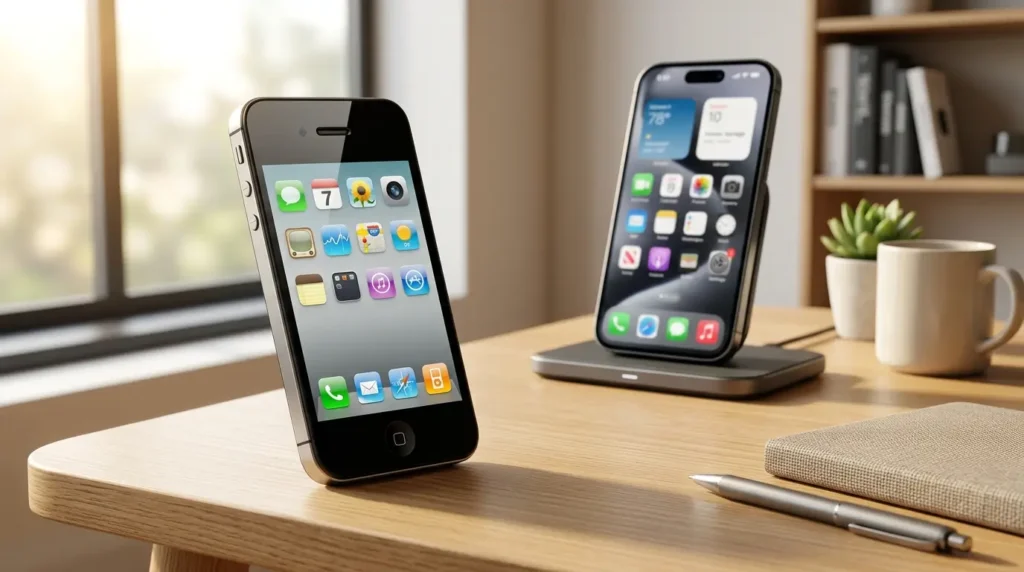
It wasn’t my first smartphone simply because it was an Apple product. It was special because, at the time, it made a smartphone feel completely different. The glass-and-steel design, the small but incredibly sharp display, the feeling of opening the App Store and discovering something new every day — all of it made the phone feel like more than another gadget.
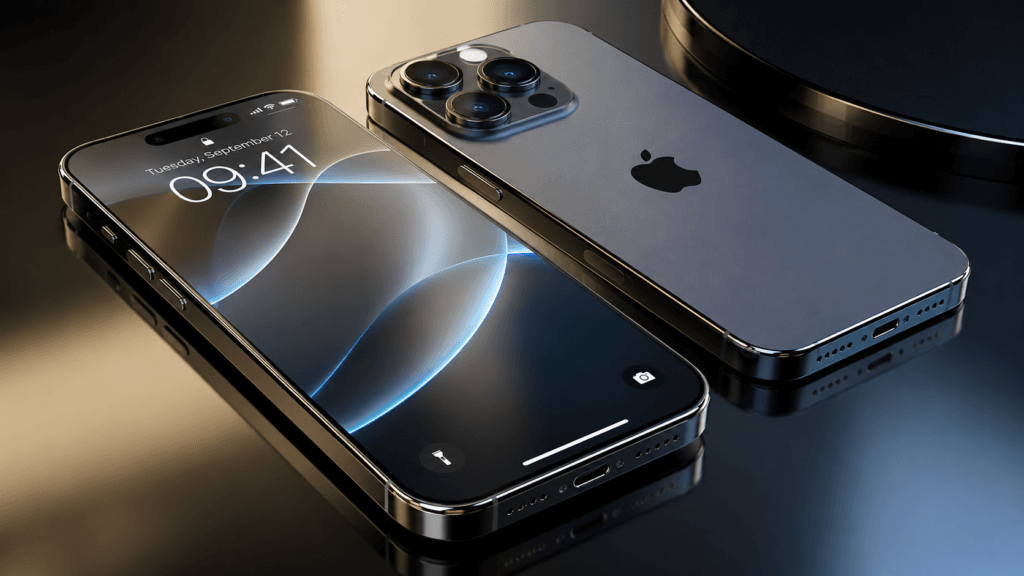
More than a decade later, smartphones have become dramatically more powerful. Today’s iPhones have advanced cameras, high-refresh-rate displays, powerful chips and built-in AI features. Apple now sells models such as the iPhone 17, iPhone Air and iPhone 17 Pro.
But whenever I think about how my relationship with smartphones began, I still go back to the iPhone 4.
Why the iPhone 4 Felt So Different
Apple introduced the iPhone 4 in June 2010, and the phone brought several features that were genuinely exciting for the time.
Apple highlighted its new Retina display, FaceTime video calling, a 5-megapixel camera, HD video recording, and the A4 processor. It also had a completely redesigned glass-and-stainless-steel body.
That combination made the iPhone 4 feel like a major step forward.
The phone had a 3.5-inch Retina display with a 960-by-640 resolution and 326 pixels per inch. By today’s standards, those numbers sound tiny, but in 2010 the display was one of the phone’s biggest attractions.
And that’s one of the things that makes old technology interesting.
A specification doesn’t exist in isolation. You have to look at what other phones were offering at the same time.
In that context, the iPhone 4’s screen felt incredibly sharp.
The Design Is Still One of My Favorite Things
Modern smartphones have become enormous compared with the iPhone 4.
The iPhone 4 measured just 4.5 inches tall and 2.31 inches wide, weighed 137 grams, and had a 3.5-inch display.
Its compact size made it comfortable to hold, while the combination of glass and stainless steel gave it a premium appearance.
There was something satisfying about simply picking it up.
Today, smartphones are increasingly designed around large displays, advanced cameras, and powerful batteries. The iPhone 4 belonged to a different era when a small screen could still feel futuristic.
And perhaps that’s part of the reason so many people still remember it.
The Retina Display Was a Big Deal
The phrase Retina Display became closely associated with Apple’s approach to smartphone screens.
The iPhone 4’s 3.5-inch display offered 960 × 640 resolution at 326 ppi. Apple positioned the technology as a major improvement in visual sharpness.
Today, we’re used to OLED panels, high refresh rates, HDR, Always-On displays and much larger screens.
But the important thing about the iPhone 4 wasn’t that it had the best screen by today’s standards.
It was that the screen felt dramatically better for its time.
That distinction is important when looking back at older technology.
The Camera Was Basic by Today’s Standards
The iPhone 4 had a 5-megapixel rear camera with an LED flash and could record 720p HD video at 30 frames per second. It also had a front-facing VGA camera.
Compare that with today’s iPhones and the difference is enormous.
Apple’s iPhone 17, for example, has a 48MP Fusion Main camera and a 48MP Fusion Ultra Wide camera, while its Center Stage front camera can capture photos at up to 18MP.
That’s an almost unbelievable jump when you put the two generations side by side.
Yet I wouldn’t say the iPhone 4’s camera was disappointing.
It was simply a product of its time.
And perhaps that’s another reason it is fun to remember.
FaceTime Made the iPhone 4 Feel Like the Future
One feature that really captured the imagination was FaceTime.
Apple introduced FaceTime with the iPhone 4 and presented it as a new way to make video calling feel simple and natural.
Today, video calls are completely ordinary.
We use them for work, family conversations, school, customer support, and everything in between.
But back then, being able to see another person through your phone felt futuristic.
That’s something that can easily disappear when we look backward through the lens of today’s technology.
Features that seem completely normal now were once the reason people were excited about a new phone.
The iPhone 4 Wasn’t Powerful by Today’s Standards
Inside the iPhone 4 was Apple’s A4 chip, along with 512MB of RAM according to teardown information. Storage options included 16GB and 32GB on the original model.
Put those numbers next to a modern iPhone, and the difference is almost comical.
Today’s iPhones can handle demanding games, computational photography, advanced video recording, and on-device AI features.
Apple’s current iPhone 17, for example, uses the A19 chip and includes neural accelerators in its GPU cores to help run generative AI models on the device.
That’s a completely different level of computing power.
And yet, the iPhone 4 did something arguably just as important for Apple: it helped establish the idea that a phone could be a powerful personal computer that happened to fit in your pocket.
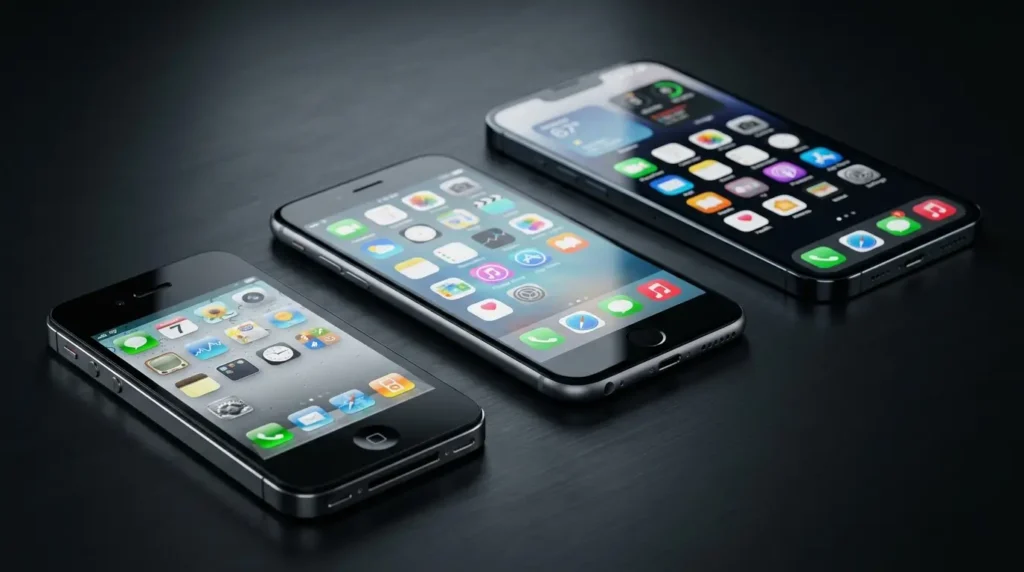
From iPhone 4 to iPhone 17: How Much Has Changed?
This is where the iPhone 4 becomes particularly interesting.
The journey from the iPhone 4 to today’s iPhones isn’t simply about faster processors.
It’s about how our expectations changed.
| Feature | iPhone 4 | Modern iPhone |
|---|---|---|
| Display | 3.5-inch Retina LCD | Large Super Retina XDR displays |
| Rear camera | 5MP | Up to 48MP systems |
| Video | Up to 720p | 4K video and advanced stabilization |
| Processor | Apple A4 | Apple silicon generations such as A19 |
| Connectivity | 3G-era cellular technology | 5G, Wi-Fi 7 on supported models |
| AI | Very limited | Apple Intelligence features |
| Charging connector | 30-pin dock | USB-C on current models |
| Display refresh | Standard | Up to 120Hz ProMotion on supported models |
The contrast is enormous.
Apple’s current iPhone 17 has a 6.3-inch Super Retina XDR display with ProMotion up to 120Hz, an A19 chip, 48MP rear cameras and USB-C connectivity.
The iPhone Air takes the modern design philosophy even further, with a 6.5-inch display, A19 Pro, a 48MP Fusion camera and a titanium frame. Apple describes it as its thinnest iPhone ever.
That’s a long way from the little 3.5-inch iPhone 4.
What I Miss About the iPhone 4
The biggest thing I miss isn’t necessarily a particular specification.
It’s the feeling.
The iPhone 4 arrived at a time when smartphones still felt relatively new. Every app seemed interesting. Every software update seemed important. Taking a photo, installing an app, or making a video call could still feel like discovering something.
Today’s phones are vastly better.
But they’re also much more familiar.
We know what a new iPhone is going to do before we even take it out of the box.
The iPhone 4 was different because it helped create many of the expectations we now take for granted.
Would I Use an iPhone 4 Today?
Probably not as my main phone.
And that’s okay.
The iPhone 4 is more than a practical smartphone today. Its old cellular technology, limited hardware, tiny storage options, and outdated software make it unsuitable for the modern smartphone experience.
Apple’s official specifications show just how far removed the hardware is from today’s devices. The original iPhone 4 came with 16GB or 32GB storage and a 3.5-inch display, while modern iPhones are built around much larger storage, displays and far more capable processors.
But if I found an original iPhone 4 in good condition, I’d still want to hold it.
Not because I think it is better than an iPhone 17.
Because it represents a different moment in smartphone history.
The iPhone 4 vs. Today’s iPhone: It’s More Than a Specs Comparison
It’s tempting to look at old technology and laugh at the specifications.
A 5MP camera?
512MB of RAM?
3.5-inch screen?
Those numbers seem tiny today.
But technology should be judged in context.
The iPhone 4 wasn’t trying to compete with an iPhone 17.
It was helping establish the path that eventually led there.
Apple’s current phones now incorporate technologies such as Apple Intelligence, advanced computational photography, ProMotion displays, 5G and high-performance chips.
The iPhone 4 was one of the earlier steps on that journey.
And that’s why I still remember it.
Final Thoughts: My First Love Wasn’t Perfect — It Was Memorable
The iPhone 4 wasn’t perfect.
It had limitations that would be difficult to accept today. Its camera was basic, the display was tiny by modern standards, and its hardware is completely outclassed by today’s smartphones.
But that’s not really the point.
My first love for the iPhone 4 came from what it represented.
It was a phone that made technology feel exciting.
It made the screen feel sharper, video calling feel more natural and mobile apps feel like an important part of everyday life. Apple introduced it with FaceTime, Retina display, a 5MP camera, HD video and the A4 processor — features that helped define the device’s place in smartphone history.
More than a decade later, the iPhone has evolved into something dramatically more powerful.
The latest models can do things that would have sounded almost impossible in 2010.
But sometimes the phone you remember most isn’t the one with the best specifications.
It’s the one that made you fall in love with the technology in the first place.
And for me, that phone was the iPhone 4.