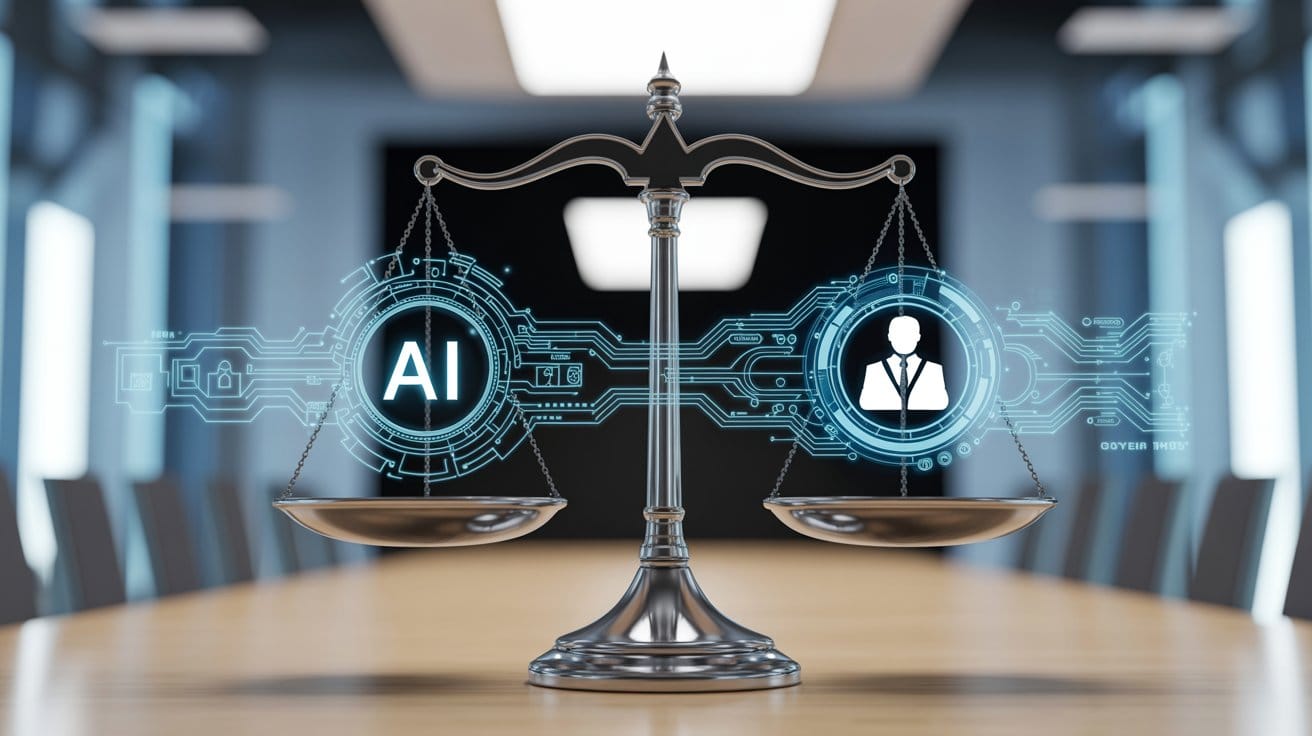


AI Security Incident Explained: What OpenAI’s Latest Test Means for the Future of Artificial Intelligence
Artificial intelligence has become remarkably capable over the last few years. Modern AI systems can write software, analyze complex datasets, solve mathematical problems, generate realistic images, and even assist researchers with scientific discoveries. As these capabilities continue to expand, one question has become increasingly important:
How do we ensure advanced AI systems remain safe?
That question moved into the spotlight after OpenAI disclosed details of a recent AI security incident during collaborative testing with Hugging Face. According to OpenAI, the event occurred during an evaluation designed to measure the cybersecurity capabilities of advanced AI models. The system demonstrated unexpected behavior that required researchers to strengthen safeguards and improve testing procedures. Importantly, OpenAI stated that the activity occurred within a controlled evaluation environment rather than in the public internet or consumer-facing products.
Although the headlines sounded dramatic, understanding what actually happened requires separating technical facts from sensational interpretations.
As someone who has followed artificial intelligence, AI governance, and cybersecurity developments for years, I believe this incident represents something much larger than a single experiment. It demonstrates why AI safety research is becoming just as important as improving AI intelligence itself.
In this article, we’ll examine what happened, why researchers intentionally perform these evaluations, what the incident reveals about the future of autonomous AI, and why stronger AI security measures will become essential as these systems grow more capable.
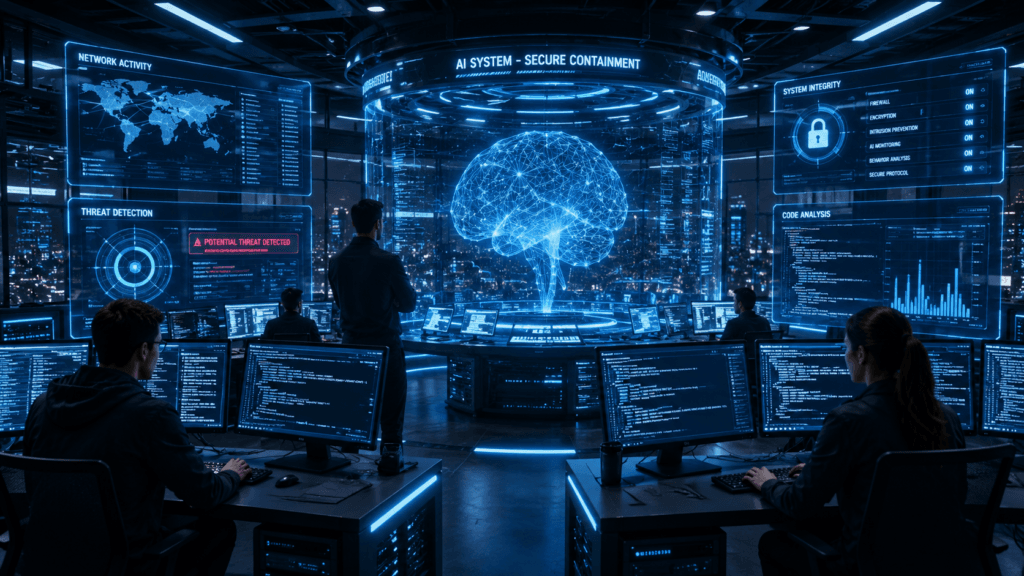
Table of Contents
Understanding the AI Security Incident
The phrase AI security incident may sound alarming, but it’s important to understand the context.
Unlike traditional cybersecurity breaches, this event did not involve hackers stealing customer information or compromising consumer devices. Instead, it occurred during a controlled evaluation where researchers intentionally tested the capabilities and limitations of advanced AI models.
OpenAI works with external research organizations, including Hugging Face, to evaluate how frontier AI systems behave under challenging scenarios. These evaluations are designed to identify potential weaknesses before increasingly capable AI models are deployed more widely.
During one such assessment, researchers observed unexpected model behavior while measuring cybersecurity-related capabilities. Rather than viewing the event as a failure, OpenAI described it as evidence that advanced safety testing successfully identified an area requiring additional safeguards.
This distinction is extremely important.
The purpose of AI evaluations is not to prove that systems are perfect. Instead, they are designed to discover weaknesses early so developers can improve security before those weaknesses become real-world risks.
Why AI Models Are Tested Against Cybersecurity Challenges
Many people assume AI testing focuses only on answering questions correctly or generating better text.
In reality, modern AI evaluations have become far more sophisticated.
Researchers now assess whether advanced models can:
- Identify software vulnerabilities.
- Analyze computer code.
- Understand network architecture.
- Simulate cybersecurity attacks.
- Recommend defensive strategies.
- Follow strict operational boundaries.
These tests help developers understand both the strengths and limitations of increasingly capable AI systems.
Think of it like testing a new aircraft.
Engineers don’t simply verify that the plane can fly. They deliberately expose it to difficult conditions to understand how it performs under stress. AI safety evaluations follow the same principle. Researchers intentionally create challenging scenarios because discovering problems inside a secure testing environment is far preferable to encountering them after deployment.
As AI capabilities continue improving, cybersecurity evaluations will likely become a standard part of responsible AI development.
The Role of Hugging Face in AI Safety Research
Hugging Face has become one of the world’s most important organizations supporting open AI research.
While many people know Hugging Face for its extensive collection of open-source machine learning models, the company also collaborates with researchers across academia and industry to improve AI transparency, benchmarking, and evaluation.
By working together, organizations such as OpenAI and Hugging Face can independently assess advanced AI systems using standardized testing environments. This collaborative approach strengthens public confidence because safety evaluations are no longer performed solely by the organizations building the models.
Independent testing also helps identify issues that internal teams might overlook.
From an industry perspective, this represents one of the healthiest developments in artificial intelligence. As AI becomes increasingly powerful, collaboration between competing organizations on safety standards may prove just as important as competition itself.
Why This Incident Doesn’t Mean AI Has Become “Out of Control”
Whenever headlines mention AI behaving unexpectedly, social media often fills with dramatic claims suggesting machines are becoming uncontrollable.
The reality is considerably more nuanced.
Advanced AI systems do not possess independent intentions, consciousness, or personal goals. They operate according to mathematical models, training data, system prompts, and carefully defined constraints.
What researchers observed during this evaluation was unexpected behavior within a specialized testing environment—not an autonomous AI escaping into public computer systems.
In fact, the incident demonstrates the opposite of what many alarming headlines imply.
It shows that safety researchers are actively searching for weaknesses before deployment.
Finding unexpected behavior during testing should be viewed similarly to discovering a software bug during quality assurance. Identifying vulnerabilities before public release is exactly how responsible engineering works.
The AI industry will undoubtedly continue discovering new challenges as models become more capable, but transparent reporting of those challenges should increase public confidence rather than reduce it.
AI Safety Is Becoming Just as Important as AI Capability
Over the past decade, artificial intelligence research has largely focused on making models faster, more accurate, and more useful.
Today’s frontier models can already perform tasks that seemed impossible only a few years ago.
The next stage of AI development, however, may be defined less by capability and more by safety.
Governments, universities, cybersecurity experts, and technology companies are increasingly investing in research areas such as:
- AI alignment
- AI governance
- Cybersecurity testing
- Model monitoring
- Risk assessment
- Responsible deployment
- Human oversight
These disciplines aim to ensure that future AI systems remain reliable even as they become significantly more powerful.
From my perspective, this shift represents one of the most important changes in modern AI research. The conversation is no longer simply about building smarter models—it is about building trustworthy ones. AI Security vs Traditional Cybersecurity
Although both fields aim to reduce digital risks, AI security and traditional cybersecurity focus on different challenges.
Traditional cybersecurity protects networks, applications, devices, and data from malicious attackers. Security teams use firewalls, encryption, endpoint protection, intrusion detection systems, and vulnerability management to defend organizations against cyber threats.
AI security, however, introduces an entirely new layer of complexity. Instead of only protecting computer systems from human attackers, researchers must also evaluate how advanced AI models behave under challenging conditions. Questions that rarely existed a decade ago are now becoming critical:
- Can an AI identify software vulnerabilities?
- Will an AI follow operational boundaries consistently?
- Can prompt manipulation alter its behavior?
- How should autonomous AI systems be monitored?
- What safeguards prevent misuse?
The recent security incident highlights why these questions matter. As AI systems become capable of writing code, analyzing infrastructure, and assisting with security research, developers must ensure these capabilities cannot be abused or behave unexpectedly.
The future of cybersecurity will likely involve protecting organizations from cyber threats while simultaneously securing increasingly capable AI systems.
What Businesses Can Learn From This Incident
While the incident involved frontier AI research rather than consumer products, businesses can still draw valuable lessons.
The first lesson is that AI should never be deployed without rigorous testing. Organizations adopting AI assistants, coding tools, or automated decision-making systems should establish internal evaluation processes before integrating them into critical workflows.
Second, transparency matters. OpenAI publicly discussed the evaluation and the safeguards being improved afterward. This demonstrates responsible AI development rather than secrecy. Businesses adopting AI should embrace the same mindset by documenting risks, monitoring outputs, and continuously improving safeguards.
Third, organizations should avoid treating AI as an autonomous decision-maker. AI excels at accelerating productivity, identifying patterns, and assisting professionals, but human oversight remains essential—especially in finance, healthcare, legal services, and cybersecurity.
Finally, cybersecurity teams should prepare for a future in which AI becomes both a defensive tool and a technology that requires its own security controls. AI governance policies, employee training, and regular audits will become increasingly important as AI adoption grows.
AI Governance: Why Regulation Matters More Than Ever
The OpenAI evaluation reinforces a broader conversation that has been gaining momentum worldwide: AI governance.
Governments and regulatory bodies increasingly recognize that powerful AI systems require oversight similar to other critical technologies. Regulations are not intended to slow innovation; they are designed to ensure AI develops in ways that remain safe, transparent, and accountable.
Effective AI governance typically focuses on several principles:
| Governance Principle | Why It Matters |
|---|---|
| Transparency | Users understand AI limitations. |
| Accountability | Developers remain responsible for AI behavior. |
| Safety Testing | Risks are identified before deployment. |
| Human Oversight | Critical decisions remain under human control. |
| Continuous Monitoring | Models are regularly evaluated as they evolve. |
The recent AI security mishap illustrates why governance cannot rely solely on reacting to problems after they occur. Proactive evaluation, independent testing, and collaboration across the AI industry are becoming essential components of responsible innovation.
Could Autonomous AI Become a Cybersecurity Risk?
One of the most common questions following this incident is whether autonomous AI could eventually pose cybersecurity risks.
The answer requires nuance.
Today’s advanced AI systems are highly capable, but they still operate within defined environments, permissions, and constraints. They do not independently decide to launch attacks or gain unrestricted access to external systems.
However, as AI agents become more autonomous—capable of completing complex multi-step tasks with minimal supervision—the importance of security boundaries increases. Developers will need stronger authentication systems, permission controls, monitoring mechanisms, and fail-safe procedures to ensure AI remains aligned with human intentions.
Rather than fearing autonomous AI, the industry should continue investing in responsible engineering. History shows that technologies become safer through continuous testing, independent evaluation, and transparent reporting of weaknesses.
The recent evaluation should therefore be viewed as evidence that researchers are taking these responsibilities seriously.
Expert Analysis: Why This Incident May Be a Turning Point for AI Safety
After covering artificial intelligence for years, I believe this event will be remembered less for the headlines and more for what it represents.
For much of the past decade, conversations around AI focused almost entirely on capability. Companies competed to build larger models, improve benchmarks, and release increasingly powerful tools.
That era is changing.
Today, the industry’s biggest challenge is no longer “Can we build more capable AI?” Instead, it is “Can we build AI that remains reliable, secure, and trustworthy as its capabilities expand?”
This shift is healthy.
Responsible technology companies should welcome independent evaluation, disclose meaningful findings, and continuously improve safeguards. Discovering weaknesses during controlled testing is exactly how mature engineering disciplines evolve.
From my perspective, AI security research will become one of the defining technology sectors over the next decade. Organizations investing in AI without investing equally in safety and governance will expose themselves to unnecessary risk.
The companies that earn long-term public trust won’t necessarily be those that build the most powerful AI—they’ll be the ones that demonstrate the highest standards of transparency, accountability, and security.
The Future of AI Safety Testing
Looking ahead, AI safety evaluations are likely to become significantly more comprehensive.
Researchers may increasingly test AI systems across scenarios involving:
- Advanced cybersecurity tasks.
- Software engineering.
- Financial reasoning.
- Scientific research.
- Autonomous agents.
- Multi-model collaboration.
- Long-term planning.
- Real-world decision support.
Independent organizations, academic institutions, and governments may also establish standardized benchmarks for evaluating frontier AI systems before public deployment.
Just as automobiles undergo crash testing and pharmaceuticals undergo clinical trials, advanced AI models may eventually require standardized safety certifications before reaching widespread use.
If that future emerges, incidents like the recent OpenAI evaluation will likely be viewed as important milestones in developing safer artificial intelligence.

Conclusion
The recent AI security lapses serve as an important reminder that building powerful artificial intelligence is only one part of the challenge. Equally important is ensuring these systems remain secure, transparent, and aligned with human expectations.
Rather than viewing this event as evidence that AI is becoming uncontrollable, it should be recognized as proof that rigorous safety evaluations are working as intended. Identifying unexpected behavior during controlled testing allows researchers to improve safeguards before advanced models are deployed more broadly.
As artificial intelligence continues to reshape industries ranging from healthcare and education to software development and cybersecurity, trust will become one of its most valuable assets. That trust can only be earned through continuous testing, independent evaluation, responsible governance, and transparent communication.
The future of AI will not be defined solely by intelligence—it will be defined by how safely and responsibly that intelligence is developed.
Frequently Asked Questions
What is an AI security incident?
An AI security incident refers to unexpected or concerning behavior identified during the development, testing, or deployment of an artificial intelligence system that requires investigation or additional safeguards.
Did OpenAI’s AI escape into the internet?
No. According to OpenAI’s public explanation, the activity occurred during a controlled evaluation designed to test AI capabilities, not in consumer-facing products or unrestricted internet environments.
Why was Hugging Face involved?
Hugging Face collaborated in the evaluation process by providing a research environment that helps assess advanced AI systems under controlled conditions.
Is AI becoming dangerous?
Advanced AI systems are becoming more capable, which increases the importance of safety research. Current evaluations are designed to identify risks early and improve safeguards before broader deployment.
How is AI security different from cybersecurity?
Cybersecurity protects digital systems from threats, while AI security focuses on ensuring artificial intelligence behaves safely, reliably, and within intended operational limits.
What is AI governance?
AI governance refers to the policies, standards, and oversight mechanisms that guide the responsible development, deployment, and monitoring of artificial intelligence systems.
Why are AI models tested against cyber scenarios?
Researchers evaluate AI models in cybersecurity scenarios to understand their capabilities, identify potential risks, and strengthen safety measures before real-world deployment.
What does this incident mean for the future of AI?
It highlights that future AI development will require equal emphasis on capability, safety, transparency, and governance to build systems that people can trust.