

WhatsApp Username Feature: Everything You Need to Know About Meta’s Biggest Privacy Upgrade
WhatsApp has always been different from other messaging apps. Since its launch, the platform has relied on phone numbers as the primary way for people to connect. While this approach made registration simple and helped users find contacts quickly, it also came with one major drawback—sharing your phone number became unavoidable.
That limitation is finally beginning to change.
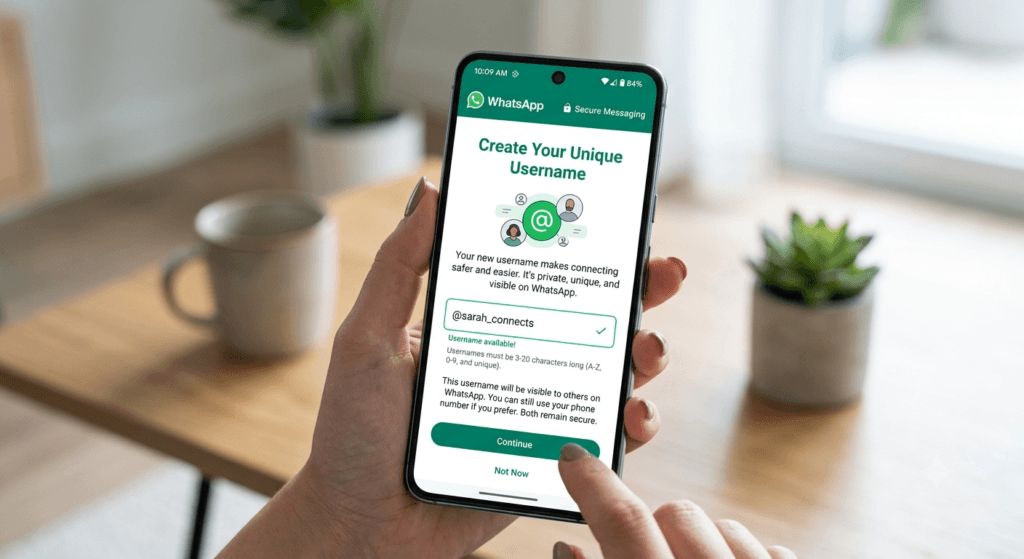
Meta has officially introduced the WhatsApp username feature, allowing users to reserve unique usernames that can be used instead of exposing their personal phone numbers during conversations. This is one of the most significant privacy-focused updates WhatsApp has announced in years and could fundamentally change how people communicate on the world’s most popular messaging platform.
Having followed WhatsApp’s evolution for more than a decade—from its early messaging features to Communities, Channels, AI integrations, and enhanced privacy tools—I believe usernames represent more than just another profile option. They mark a strategic shift toward modern digital identity, giving users greater control over how they connect with others while reducing unnecessary exposure of personal information.
In this guide, we’ll explain how the WhatsApp username feature works, why Meta introduced it, how to reserve your username, the privacy benefits it offers, and what it means for individuals, businesses, and the future of secure messaging.
Why WhatsApp Is Finally Introducing Usernames
For years, users have requested a way to communicate without sharing their phone numbers.
Unlike apps such as Telegram, Discord, Signal, or Skype, WhatsApp requires every conversation to begin with a phone number. While this design simplified contact discovery, it created privacy concerns for many users.
Consider a freelancer communicating with new clients.
Or a small business responding to customer inquiries.
Or someone buying and selling products online.
In each of these situations, sharing a personal phone number may not be ideal.
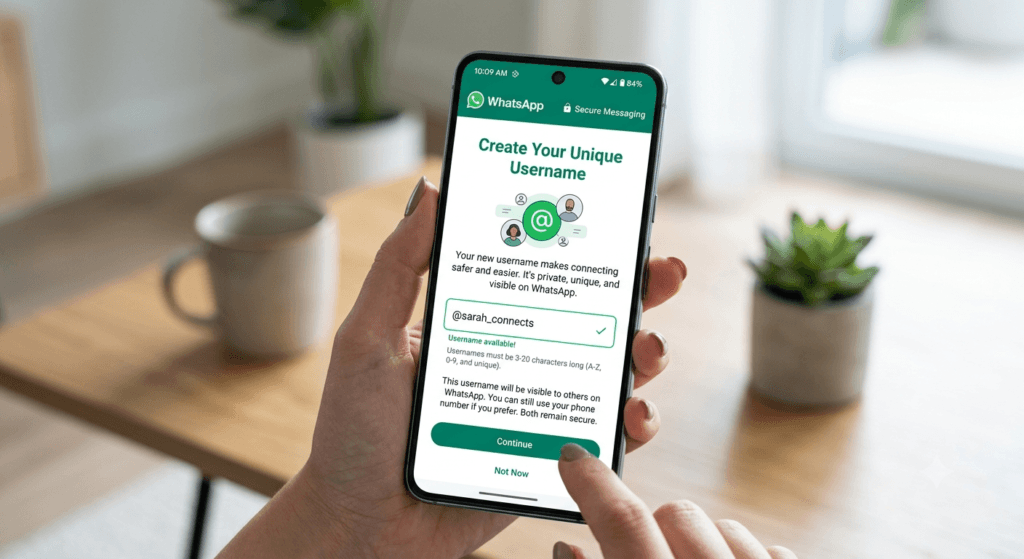
The WhatsApp username feature addresses this issue by allowing users to identify themselves through unique usernames instead of immediately revealing sensitive contact information.
From my perspective as someone who has covered messaging platforms for years, this isn’t simply about convenience.
It’s about digital privacy.
The internet has changed dramatically over the last decade. People increasingly interact with strangers through marketplaces, online communities, creator platforms, gaming networks, and professional collaborations. Giving users more control over their identity has become essential rather than optional.
Meta clearly recognizes this shift.
What Is the WhatsApp Username Feature?
The WhatsApp username feature introduces a new way for users to identify themselves within the app.
Instead of relying exclusively on phone numbers, users will be able to create a unique username associated with their account.
Think of it as similar to:
- Instagram usernames
- Telegram usernames
- Discord usernames
- X (formerly Twitter) handles
Rather than giving someone your phone number, you’ll simply be able to share your username.
This creates a much cleaner communication experience while reducing unnecessary exposure of personal information.
Although phone numbers will still play an important role in account verification and registration, usernames become the public identity people interact with.
This subtle distinction significantly improves privacy without changing the core WhatsApp experience users already know.
How the WhatsApp Username System Works
Although the rollout is still expanding, Meta has outlined the general concept behind usernames.
Each account can reserve a unique username.
That username becomes another way for people to discover and communicate with you.
The system is expected to include several protections to prevent impersonation and confusion.
Key characteristics include:
- Unique usernames
- Username availability checks
- Profile association
- Secure verification
- Privacy-focused sharing
- Easy discoverability
Users won’t need to expose their phone number simply to begin a conversation.
Instead, usernames become the primary public identifier.
This model already works successfully across many major communication platforms.
WhatsApp is adapting that approach while maintaining its strong focus on encrypted messaging.
How to Reserve Your WhatsApp Username
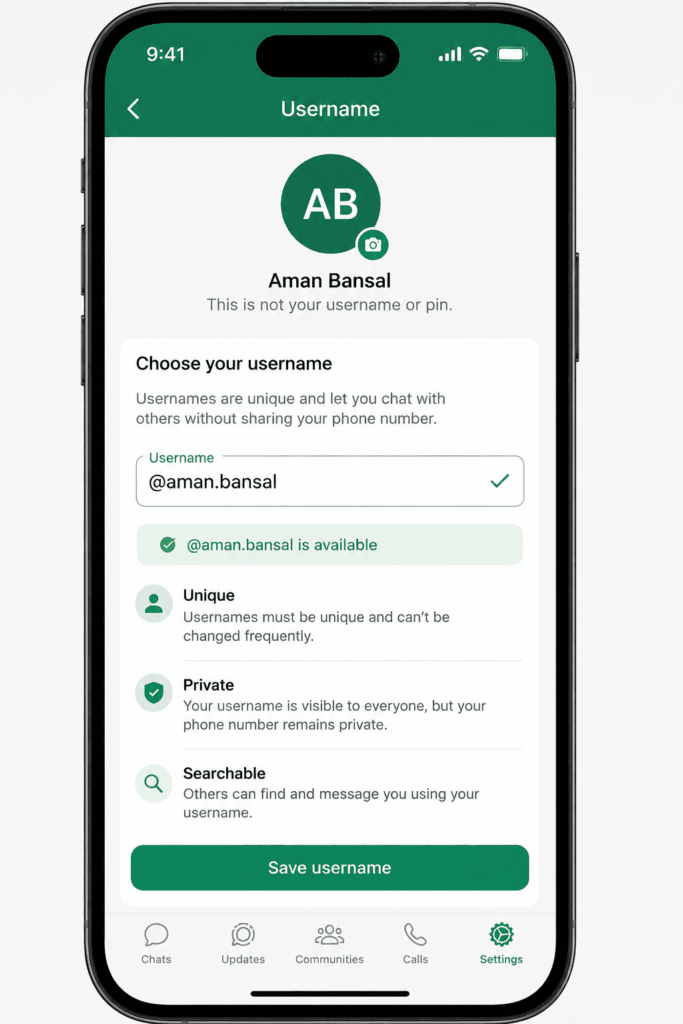
Once the feature becomes available on your account, reserving a username is expected to be straightforward.
Although the interface may vary slightly during the rollout, the general process will likely involve:
- Open WhatsApp Settings.
- Navigate to your Profile.
- Select the Username option.
- Enter your preferred username.
- Check username availability.
- Confirm your selection.
- Save your profile.
If your preferred username is already taken, WhatsApp will likely suggest alternative variations.
Choosing a good username early may become increasingly important as millions of users begin reserving their identities.
For that reason, individuals and businesses should consider claiming usernames that match their existing brand names or social media handles whenever possible.
Consistency across platforms helps users recognize your identity more easily and strengthens personal or business branding.
Benefits of the WhatsApp Username Feature
From an everyday user’s perspective, this update solves several long-standing problems.
Better Privacy
The biggest improvement is obvious.
You no longer need to immediately reveal your personal phone number when communicating with someone new.
That creates a safer environment for online interactions.
Easier Networking
Professionals frequently exchange contact information during conferences, business meetings, webinars, and online communities.
Sharing a username feels much simpler than sharing a personal mobile number.
Stronger Brand Identity
Businesses, creators, influencers, and organizations can reserve usernames that match their existing online presence.
This creates consistency across multiple platforms.
Reduced Spam Risks
When phone numbers become less visible, users may experience fewer unwanted contacts from unknown individuals.
Improved User Experience
Finding and adding contacts becomes faster and more intuitive.
Rather than saving someone’s number first, users can search directly by username if the feature supports it.
From years of testing messaging applications, I consider this one of the most practical usability improvements WhatsApp has introduced.
Instead of changing how people communicate, it removes unnecessary friction from the process.
WhatsApp Username vs Phone Number
| Feature | WhatsApp Username | Phone Number |
|---|---|---|
| Privacy | High | Lower |
| Easy Sharing | Excellent | Moderate |
| Business Friendly | Excellent | Good |
| Public Identity | Yes | No |
| Required for Registration | No | Yes |
| Personal Information Exposure | Minimal | Higher |
The table clearly shows why usernames represent such a meaningful evolution.
Rather than replacing phone numbers entirely, WhatsApp is giving users an additional privacy layer that better reflects how modern communication works.
For millions of people who regularly interact with new contacts, this small change could make a significant difference in everyday digital privacy.
What the WhatsApp Username Feature Means for Businesses
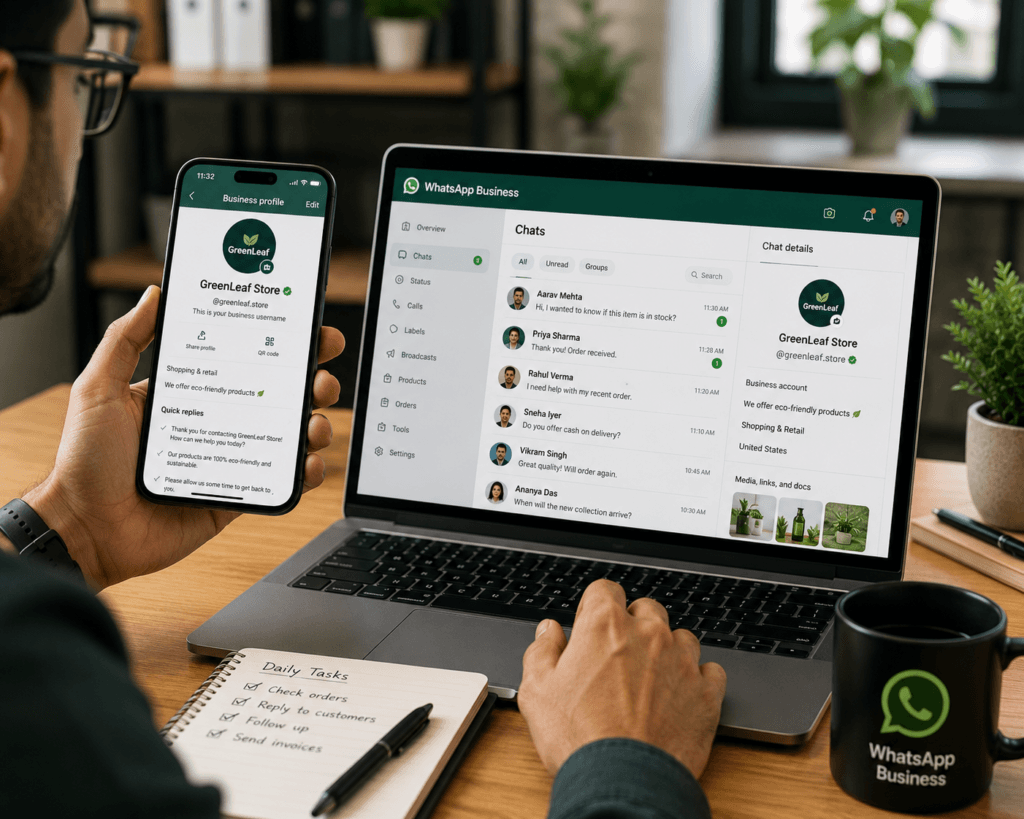
For businesses, the WhatsApp username feature is much more than a privacy update—it’s a branding opportunity. Over the years, WhatsApp has evolved into one of the world’s most important customer communication platforms. Millions of businesses already use WhatsApp Business to provide customer support, send order updates, and communicate with potential clients. Until now, every interaction required customers to see and save a phone number, which wasn’t always ideal for building a recognizable brand.
With usernames, businesses can establish a more memorable digital identity. Imagine a customer searching for @NetQuill instead of trying to remember an international phone number. This creates consistency across platforms, especially for brands that already use the same username on Instagram, Facebook, X, or LinkedIn.
From my experience working with SEO and digital branding, consistency is one of the most overlooked factors in online visibility. When users repeatedly encounter the same brand name across multiple platforms, trust naturally increases. A unified username strategy also makes it easier for customers to verify they’re communicating with the correct business.
Businesses should reserve their preferred username as soon as the feature becomes available. Generic names, short brand names, and common keywords are likely to be claimed quickly. If your business name is already established across social platforms, securing the same username on WhatsApp should become a priority.
Read More Instagram vs TikTok for U.S. Content Creators in 2026
Privacy Improvements That Go Beyond Convenience
The introduction of usernames addresses one of WhatsApp’s longest-standing privacy concerns. For years, users had to reveal their phone numbers to initiate conversations with new contacts. While end-to-end encryption protected message content, the exposure of personal contact details remained unavoidable.
The WhatsApp username feature changes that dynamic by allowing users to communicate through a public identifier rather than immediately exposing their phone number. This is particularly valuable for freelancers, online sellers, educators, creators, and anyone who regularly interacts with people they don’t know personally.
There are several practical privacy benefits:
- Reduced exposure of personal phone numbers.
- Safer communication with new contacts.
- Better protection when participating in online communities.
- Lower risk of unwanted calls or spam messages.
- Greater confidence when buying or selling products online.
It’s important to note that usernames don’t replace WhatsApp’s security model. Phone numbers will still be required for account registration and verification, while end-to-end encryption will continue protecting conversations. Usernames simply provide an additional privacy layer that gives people more control over how they present themselves online.
How WhatsApp Compares to Telegram, Signal, and Discord
WhatsApp isn’t the first messaging platform to introduce usernames. Several competitors have offered similar functionality for years, each with its own approach.
| Platform | Usernames | Phone Number Required | End-to-End Encryption |
|---|---|---|---|
| Yes (Rolling Out) | Yes | Yes | |
| Telegram | Yes | Initially | Optional for Secret Chats |
| Signal | Limited Username Features | Yes | Yes |
| Discord | Yes | No | No (Standard Chats) |
This comparison highlights an important point: WhatsApp is combining the familiarity of phone-number registration with the flexibility of usernames. Rather than abandoning its existing system, Meta is enhancing it to meet modern expectations for privacy and convenience.
Best Practices for Choosing a WhatsApp Username
Selecting the right username is more important than many users realize. Your username may become the primary way people identify you on WhatsApp, so it’s worth choosing carefully.
Here are some practical recommendations:
- Keep it short and memorable. Long or complicated usernames are harder to remember and share.
- Match your existing branding. If you already use the same name on Instagram, X, or LinkedIn, maintain consistency.
- Avoid unnecessary numbers and symbols. Clean usernames appear more professional and are easier to type.
- Think long term. Choose a name that will still represent you or your business several years from now.
- Protect your identity. Avoid using sensitive personal information that could compromise your privacy.
For businesses, using the official brand name strengthens recognition and reduces customer confusion. For individuals, a professional username can make networking much easier.
Potential Risks and How to Stay Safe
Every new feature introduces new opportunities, but it can also create challenges. Usernames may become targets for impersonation, phishing attempts, or fraudulent accounts pretending to represent well-known brands or public figures.
Users should remain cautious when interacting with unfamiliar accounts. Before sharing sensitive information, verify profiles carefully and look for official indicators if they become available. Businesses should also educate customers about their legitimate username to reduce the risk of scams.
From years of observing digital platforms, one lesson stands out: convenience should never replace security awareness. Even the best privacy tools are most effective when users combine them with safe online practices.
Expert Analysis: Why This Is One of WhatsApp’s Most Important Updates
After following messaging platforms for more than a decade, I believe the WhatsApp username feature is one of the most strategically significant changes since WhatsApp introduced end-to-end encryption.
The reason isn’t simply that usernames are convenient. It’s because they fundamentally change how people establish trust online.
Historically, a phone number acted as both an identity and a communication method. That approach worked well when messaging was limited to friends and family. Today’s digital world is very different. People collaborate with clients, creators, communities, marketplaces, and businesses across the globe every day. Sharing a personal phone number in every interaction no longer makes sense.
Meta’s decision reflects a broader industry trend toward identity-first communication. Platforms increasingly allow users to control how they present themselves while protecting sensitive information behind the scenes.
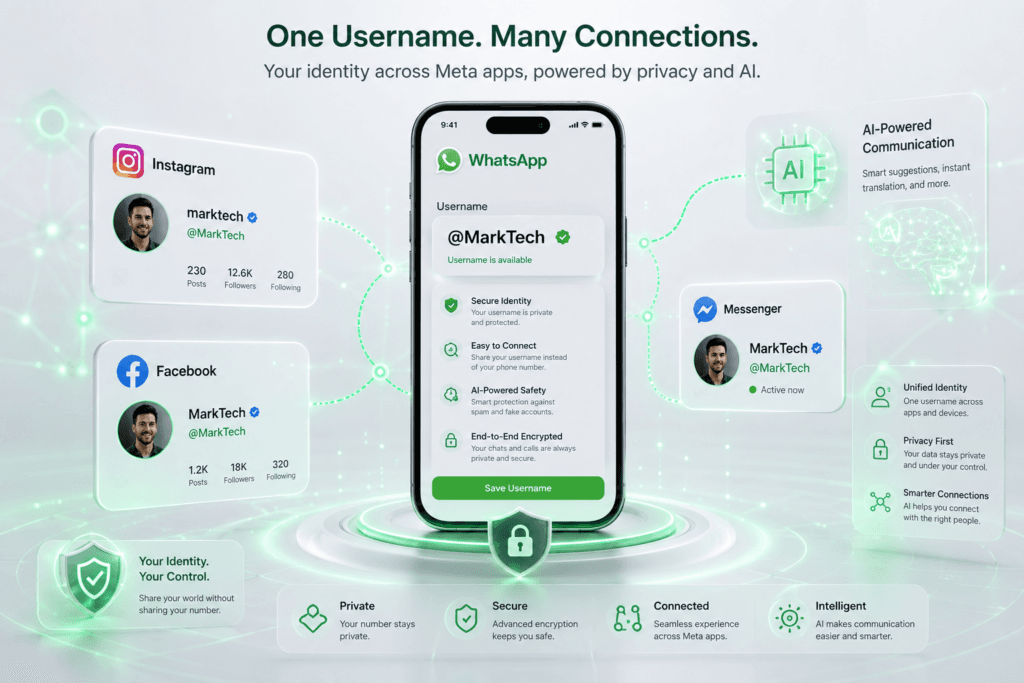
I also expect this feature to integrate more deeply with Meta’s ecosystem over time. It’s easy to imagine future experiences where usernames work seamlessly across WhatsApp, Instagram, Messenger, and other Meta services, creating a unified digital identity without sacrificing user privacy.
For businesses, creators, and professionals, this shift reinforces an important lesson: secure communication and strong branding are no longer separate goals—they complement each other.
The Future of WhatsApp Usernames
The current rollout is likely only the beginning. As the feature matures, WhatsApp could introduce additional capabilities that make usernames even more useful.
Possible future enhancements include:
- Username-based contact discovery.
- Easier sharing through QR codes.
- Better integration with WhatsApp Business.
- Verified business usernames.
- Cross-platform identity across Meta apps.
- Enhanced privacy controls for public profiles.
- AI-powered contact suggestions based on usernames.
While Meta has not confirmed all of these possibilities, they align with broader trends in digital communication and identity management.
Conclusion
The WhatsApp username feature represents a meaningful step forward in how people communicate online. By allowing users to reserve unique usernames, Meta is addressing a long-standing privacy concern while making the platform more flexible for personal conversations, professional networking, and business communication.
For everyday users, usernames reduce the need to expose personal phone numbers and create a safer way to connect with new contacts. For businesses and creators, they provide an opportunity to strengthen brand recognition and deliver a more professional customer experience.
From an industry perspective, this update signals a broader shift toward privacy-focused digital identities. Messaging platforms are evolving beyond simple contact lists and becoming comprehensive communication ecosystems where users expect both convenience and control.
As the rollout expands, securing a relevant username early will be an important step for individuals and organizations alike. Those who understand the feature now will be well positioned to take advantage of its benefits as it becomes available worldwide.
Frequently Asked Questions
1. What is the WhatsApp username feature?
The WhatsApp username feature allows users to create a unique username that others can use to find and contact them without immediately sharing their phone number.
2. How do I reserve a WhatsApp username?
When the feature becomes available on your account, you’ll be able to choose and reserve a unique username from your profile settings.
3. Will usernames replace phone numbers?
No. Phone numbers will still be required for account registration and verification. Usernames simply provide an additional way to identify and contact users.
4. Are WhatsApp usernames unique?
Yes. Each username is expected to be unique, ensuring that every account has a distinct public identifier.
5. Is the WhatsApp username feature available globally?
Meta is rolling out the feature gradually, so availability may vary depending on your region and account.
6. Can businesses use WhatsApp usernames?
Yes. Businesses can use usernames to create a more recognizable brand identity and make it easier for customers to find them.
7. Will my phone number remain private?
Usernames are designed to reduce unnecessary sharing of phone numbers, offering users an additional layer of privacy during conversations.
8. Can I change my WhatsApp username later?
Meta has not finalized all feature details, but users are expected to have options for managing or updating their usernames within certain limits.
Interested in Writing for NetQuill?
Are you passionate about technology, AI, cybersecurity, mobile apps, or digital privacy? We’d love to feature your expertise. Visit our Write for Us page to learn how you can contribute original, high-quality content to NetQuill and reach a growing audience of tech enthusiasts.
👉 Become a contributor and share your knowledge with the tech community.