
Instagram Algorithm Customization: How Meta Is Giving Users More Control Over Their Feed
Social media algorithms have always been a topic of debate. Some users believe algorithms help them discover relevant content, while others feel trapped in an endless stream of posts they never wanted to see. Over the past decade, Instagram’s recommendation engine has become one of the most sophisticated artificial intelligence systems in the social media industry. Every scroll, like, comment, save, and share helps the platform learn more about user preferences.
Now, Meta is taking another significant step by testing additional ways for users to influence what appears in their Instagram feeds. Instead of relying entirely on artificial intelligence to decide what people should see, the company is gradually allowing users to play a more active role in shaping their own recommendations. This marks an important shift in how social media personalization works.
Having followed Instagram’s evolution since its chronological-feed days, I’ve seen the platform transform from a simple photo-sharing app into an AI-driven content discovery engine. Every major update has changed how creators reach audiences and how users consume content. This latest move isn’t just another feature update—it represents a philosophical change in how recommendation systems are built.
In this article, we’ll explore what Instagram algorithm customization means, how it works, why Meta is introducing these changes, and what users, creators, and businesses should expect in the coming years.

Why Instagram Is Changing Its Algorithm
Instagram’s recommendation system has one primary objective: keeping users engaged for as long as possible. To achieve this, the platform analyzes hundreds of signals, including viewing habits, interactions, search history, followed accounts, and content preferences.
For years, these recommendations have been generated almost entirely by machine learning models. While the system has become incredibly accurate, it has also received criticism. Users frequently complain that their feeds become repetitive, overly focused on one topic, or filled with suggested posts that don’t reflect their current interests.
Meta appears to recognize that user preferences change more quickly than AI models sometimes adapt. Someone who watches travel videos for a week doesn’t necessarily want travel content dominating their feed for months. Likewise, users may develop new hobbies, follow different creators, or lose interest in certain topics over time.
By giving people more control over recommendations, Instagram aims to create a healthier relationship between artificial intelligence and user intent. Instead of replacing AI, Meta is allowing users to guide it more effectively.
From my perspective, this is one of the smartest product decisions Instagram has made in recent years. Artificial intelligence performs exceptionally well when it receives quality feedback. Giving users simple ways to influence recommendations ultimately helps the algorithm become more accurate.
What Is Instagram Algorithm Customization?
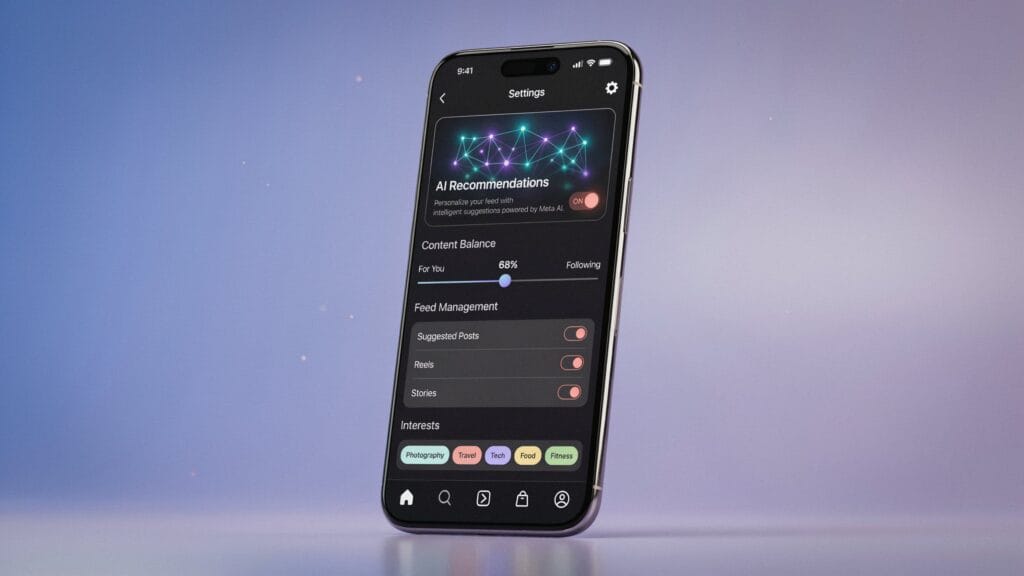
Instagram algorithm customization refers to new tools that allow users to influence how Instagram’s recommendation system selects content for their Feed, Reels, Explore page, and suggested posts.
Rather than treating the recommendation engine as a “black box,” Instagram is gradually introducing features that provide more transparency and control.
These customization tools may include options such as:
- Resetting recommendation history
- Choosing topics of interest
- Reducing unwanted content
- Managing suggested posts
- Improving content preferences
- Hiding repetitive recommendations
- Training the algorithm through direct feedback
This represents an evolution from passive personalization to active personalization.
Instead of hoping the algorithm eventually understands your interests, you can now help guide it in the right direction.
This shift benefits both users and Meta. Users receive more relevant content, while Instagram gathers stronger preference signals that improve its machine learning models.
How the Instagram Algorithm Actually Works
One of the biggest misconceptions I encounter when discussing social media is the belief that Instagram has a single algorithm.
In reality, Instagram uses multiple recommendation systems.
Each section of the app has its own ranking signals.
Feed Ranking
The main feed primarily prioritizes content from people users already follow. However, engagement history, recency, interaction frequency, and relationship strength all influence visibility.
Reels Algorithm
Reels focuses heavily on entertainment value. Watch time, completion rate, replays, shares, and saves carry significantly more weight than simple likes.
Explore Page
Explore introduces users to creators they don’t currently follow.
This recommendation engine analyzes viewing behavior, niche interests, similar audience groups, and trending topics.
Stories
Stories rely heavily on personal relationships.
Users whose stories receive frequent replies, reactions, or direct interactions tend to appear first.
Understanding these differences helps explain why users sometimes experience inconsistent recommendations across different parts of Instagram.
Algorithm customization aims to improve each of these recommendation engines without removing artificial intelligence from the equation.
What Meta’s New AI Recommendation Controls Mean
The newest recommendation controls represent a subtle but important change in Instagram’s long-term strategy.
Instead of assuming its AI always knows best, Meta is acknowledging something many users have felt for years: algorithms need better human guidance.
This doesn’t mean artificial intelligence is becoming less important. Quite the opposite.
The future of recommendation systems will combine machine learning with explicit user feedback.
Imagine teaching a music streaming service exactly which genres you enjoy rather than hoping it eventually figures it out.
Instagram appears to be applying the same principle to social content.
As these controls expand, users may find it easier to:
- Discover new creators
- Remove irrelevant recommendations
- Explore different interests
- Prevent repetitive content
- Improve overall browsing quality
From years of observing recommendation systems across YouTube, TikTok, Facebook, and Instagram, one lesson stands out clearly.
Artificial intelligence is incredibly good at recognizing patterns.
Humans, however, are much better at recognizing changing preferences.
The strongest recommendation systems combine both.
Instagram’s latest direction suggests Meta has finally embraced that reality.
How Instagram Algorithm Customization Benefits Everyday Users
For years, one of the biggest frustrations among Instagram users has been feeling like they had little control over what appeared in their feeds. You might spend a few minutes watching travel videos before a vacation, only to have your Explore page filled with travel content long after you’ve returned home. Similarly, interacting with one fitness post could result in weeks of workout recommendations, even if your interests had already shifted.
Instagram algorithm customization aims to solve this problem by making personalization more responsive. Instead of forcing users to wait for the AI to gradually adapt, Instagram is beginning to provide tools that allow people to influence recommendations more directly. This creates a browsing experience that feels more intentional rather than random.
Another important advantage is improved content diversity. Recommendation engines naturally reinforce existing behaviors because they assume that past engagement predicts future interests. While this often works well, it can also create “content bubbles” where users repeatedly see similar posts. Customization tools give users the ability to break out of those patterns and discover fresh creators, new hobbies, and different perspectives.
From my experience reviewing AI-powered recommendation systems across multiple platforms, user satisfaction improves dramatically when people feel they have some control over the technology. Even small adjustments can make a platform feel more personalized and less overwhelming.
Why This Update Matters for Content Creators
For creators, every algorithm update creates both excitement and uncertainty. Instagram has become one of the world’s most competitive platforms, where visibility often depends on how well content aligns with the recommendation system. Whenever Meta changes how recommendations work, creators naturally ask one question: Will this help or hurt my reach?
The answer depends on content quality.
If users can actively shape their recommendations, creators who consistently publish valuable, engaging, and relevant content may benefit over time. Instead of relying solely on viral trends, creators will need to build genuine audience interest that encourages viewers to engage intentionally.
Several engagement signals are likely to remain important:
| Engagement Signal | Why It Matters |
|---|---|
| Watch Time | Indicates strong viewer interest |
| Saves | Suggests long-term value |
| Shares | Expands organic reach |
| Comments | Encourages community interaction |
| Profile Visits | Shows deeper audience curiosity |
| Follows | Demonstrates lasting interest |
One trend I’ve noticed over the past few years is that Instagram increasingly rewards meaningful engagement rather than superficial metrics. A post with fewer likes but many saves and shares often performs better over time than one with thousands of quick likes.
Creators should also remember that algorithm customization doesn’t replace AI. Instead, it gives users better tools to train the recommendation system. High-quality content remains the foundation of long-term growth.

What Businesses and Marketers Should Expect
Brands that rely on Instagram for marketing should view these changes as an opportunity rather than a challenge.
Consumers increasingly expect personalized online experiences. Generic marketing messages rarely perform as well as content that genuinely matches user interests. If Instagram’s recommendation system becomes more accurate through user customization, businesses that understand their audience will likely see stronger engagement from the right people.
This also means marketers should shift their focus away from chasing algorithm “hacks.” Instead, they should invest in understanding customer behavior, creating educational content, answering common questions, and publishing material that solves real problems.
Businesses should consider several best practices:
- Develop content for specific audience segments.
- Encourage meaningful conversations instead of chasing likes.
- Publish a consistent mix of educational, entertaining, and promotional content.
- Monitor audience feedback and adapt quickly.
- Use analytics to identify which topics generate long-term engagement.
As someone who has worked with SEO and content marketing strategies for years, I’ve found that the same principle applies across search engines and social platforms: algorithms reward content that genuinely helps users.
The Role of Artificial Intelligence in Instagram’s Future
Artificial intelligence sits at the heart of Instagram’s recommendation engine. Every action users take generates signals that machine learning models analyze to predict future interests.
These systems evaluate hundreds of factors, including:
- Viewing duration
- Scroll speed
- Content categories
- Account relationships
- Device usage
- Location trends
- Time of day
- Engagement patterns
What makes Instagram’s AI particularly impressive is its ability to combine these signals into highly personalized recommendations.
However, no AI model is perfect.
Machine learning excels at identifying patterns, but it doesn’t always understand changing human preferences. Someone’s interests can evolve quickly, especially during major life events such as changing careers, starting a new hobby, or preparing for travel.
This is where Instagram algorithm customization becomes valuable.
Instead of expecting AI to guess perfectly, Meta is allowing users to provide direct feedback that helps improve recommendation accuracy.
In my opinion, this represents the future of recommendation systems—not replacing AI with manual controls, but creating collaboration between human preferences and machine intelligence.
Privacy and Transparency Considerations
Whenever personalization improves, questions about privacy naturally follow.
Instagram’s recommendations depend on user activity. Every interaction contributes to the platform’s understanding of individual interests. Some users appreciate this personalization because it makes content discovery easier, while others worry about how much information platforms collect.
Customization features may actually improve transparency.
Rather than wondering why certain posts appear, users gain greater visibility into how recommendations work and how they can influence them. This shift helps build trust by making AI systems feel less mysterious.
At the same time, users should continue practicing good digital habits:
- Review privacy settings regularly.
- Understand data-sharing preferences.
- Be mindful of app permissions.
- Use two-factor authentication.
- Stay informed about platform updates.
Greater control over recommendations is a positive step, but informed users remain the strongest defense against privacy concerns.
Expert Analysis: Why This Update Is More Important Than It Appears
After analyzing Instagram’s major algorithm updates over the past decade, one pattern has become increasingly clear.
Instagram is gradually moving away from being a platform that simply predicts what users want toward becoming a platform that asks users what they actually want.
That distinction is significant.
Many technology companies spent years believing artificial intelligence could completely replace explicit user feedback. Experience has shown that while AI is remarkably powerful, it performs best when people actively guide it.
From a business perspective, this change also benefits advertisers, creators, and users simultaneously.
- Users receive more relevant recommendations.
- Creators reach audiences with genuine interest.
- Advertisers improve campaign targeting.
- Instagram increases long-term engagement.
This creates a healthier ecosystem where recommendation quality improves through collaboration rather than automation alone.
I believe this direction will influence not only Instagram but also other major social platforms over the next several years.
The Future of Instagram Algorithm Customization
The current testing phase is likely only the beginning.
As artificial intelligence continues to evolve, Instagram may introduce additional personalization features such as:
- Topic preference dashboards
- Interest categories
- Personalized discovery modes
- AI-generated content summaries
- Better creator recommendations
- Smarter shopping suggestions
- Enhanced parental controls
- More transparent recommendation explanations
These developments align with a broader industry trend toward giving users greater influence over AI-driven experiences.
Rather than treating personalization as something that happens behind the scenes, platforms are increasingly recognizing that users want to participate in shaping their digital environment.
Instagram’s latest experiments suggest the company is preparing for that future.
Conclusion
Instagram algorithm customization represents one of the most meaningful improvements to the platform’s recommendation system in recent years. Instead of relying entirely on artificial intelligence to determine what users should see, Meta is gradually introducing tools that give people more influence over their own experience.
For everyday users, this means more relevant content, fewer unwanted recommendations, and greater control over the Feed, Explore page, and Reels. For creators and businesses, it reinforces an important lesson: authentic, high-quality content remains the most reliable strategy for long-term success.
Artificial intelligence will continue to play a central role in Instagram’s future, but the platform is clearly moving toward a model where human preferences and machine learning work together rather than separately.
As social media becomes increasingly personalized, those who understand how recommendation systems evolve will be better positioned to benefit from every new update.
Frequently Asked Questions
1. What is Instagram algorithm customization?
Instagram algorithm customization refers to new features that allow users to influence how Instagram recommends content across the Feed, Reels, Explore page, and suggested posts.
2. Can I change my Instagram recommendations?
Yes. Instagram is testing additional tools that let users manage interests, reduce unwanted content, and improve recommendation accuracy.
3. Does Instagram use artificial intelligence?
Yes. Instagram relies heavily on AI and machine learning to rank content, recommend creators, and personalize each user’s experience.
4. Will algorithm customization affect creators?
Potentially. Creators who consistently publish valuable, engaging, and audience-focused content are likely to benefit from more accurate recommendation systems.
5. How can I improve my Instagram feed?
Interact with content you genuinely enjoy, hide irrelevant posts, follow creators who match your interests, and use any available recommendation controls.
6. Does Instagram collect data to personalize recommendations?
Yes. Instagram analyzes user interactions to personalize content. Users can review privacy settings and manage certain preferences within the app.
7. Is Instagram algorithm customization available to everyone?
Meta is testing these features gradually, so availability may vary by region and account as the rollout expands.
Interested in Writing for NetQuill?
Are you passionate about technology, AI, social media, cybersecurity, mobile devices, or digital marketing? We’d love to feature your expertise. If you have original insights or practical experience to share, visit our Write for Us page to learn about our contributor guidelines and become part of the NetQuill community.
👉 Contribute to NetQuill and share your knowledge with thousands of tech enthusiasts.